
Seed
Collection
We gather seeds from various native trees, focusing on those that are disappearing from our forests, including some that are endangered.
Removal of Non-Native
Invasive Species
We remove non-native invasive tree and shrub species that disrupt local ecosystems. This creates space for native species to thrive and flourish again.
We work hard to figure out how to germinate seeds that are difficult to grow. These young trees are later planted to restore and expand wild landscapes.
Native Tree
Nursery
Tree Identification
Workshop
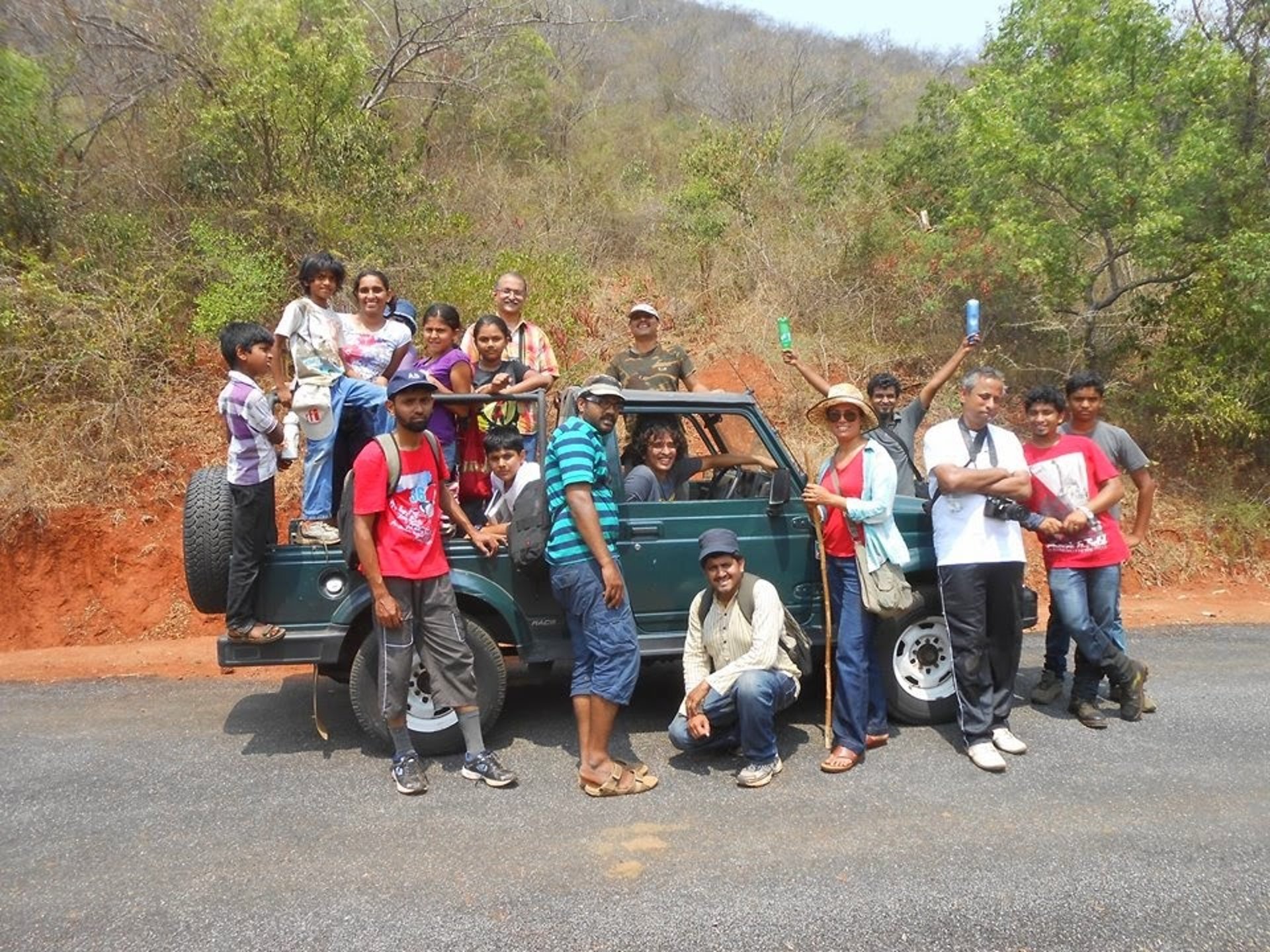
We teach people interested in rewilding how to recognize and understand native tree species. This hands-on learning builds deeper connections to local nature.








Rewilding Our World, One Native Tree at a Time
Rooted in Conservation: Rewilding Native Trees & Shrubs
At the Bamboo Pit Viper Research Centre, we are dedicated to rewilding, ecological restoration, and fostering a deeper connection between people and nature.
Located at the confluence of Tamil Nadu, Karnataka, and Andhra Pradesh, our field station is more than just a research base — it’s a living classroom and a community hub for students, researchers, and conservationists.
Through hands-on research, biodiversity surveys, and collaborative learning, we aim to protect fragile ecosystems while inspiring the next generation of environmental stewards.
The Journey of Rewilding Native Species
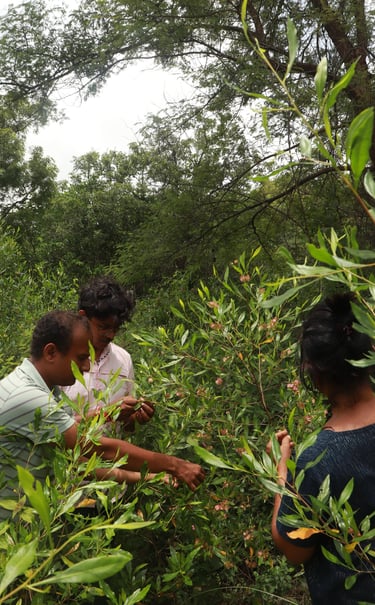
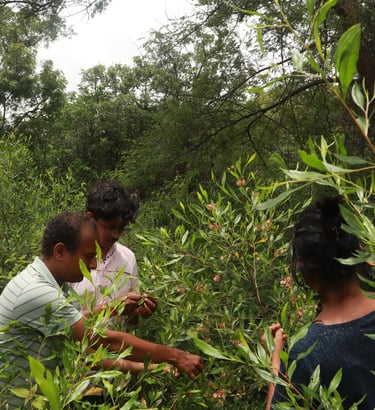
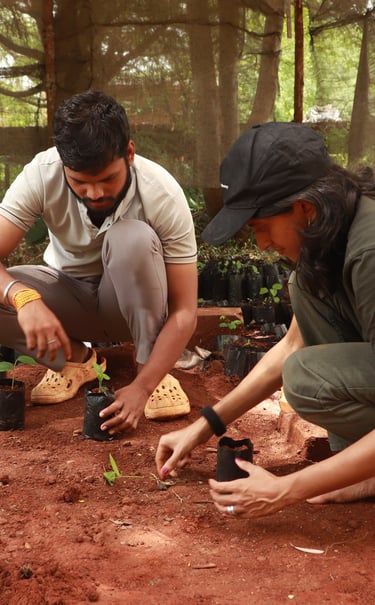
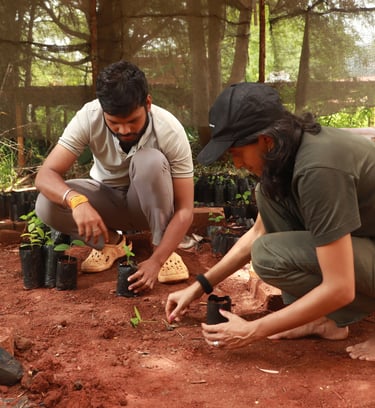
Seed
Collection
We carefully gather seeds from native trees and shrubs to preserve biodiversity and ensure genetic resilience.
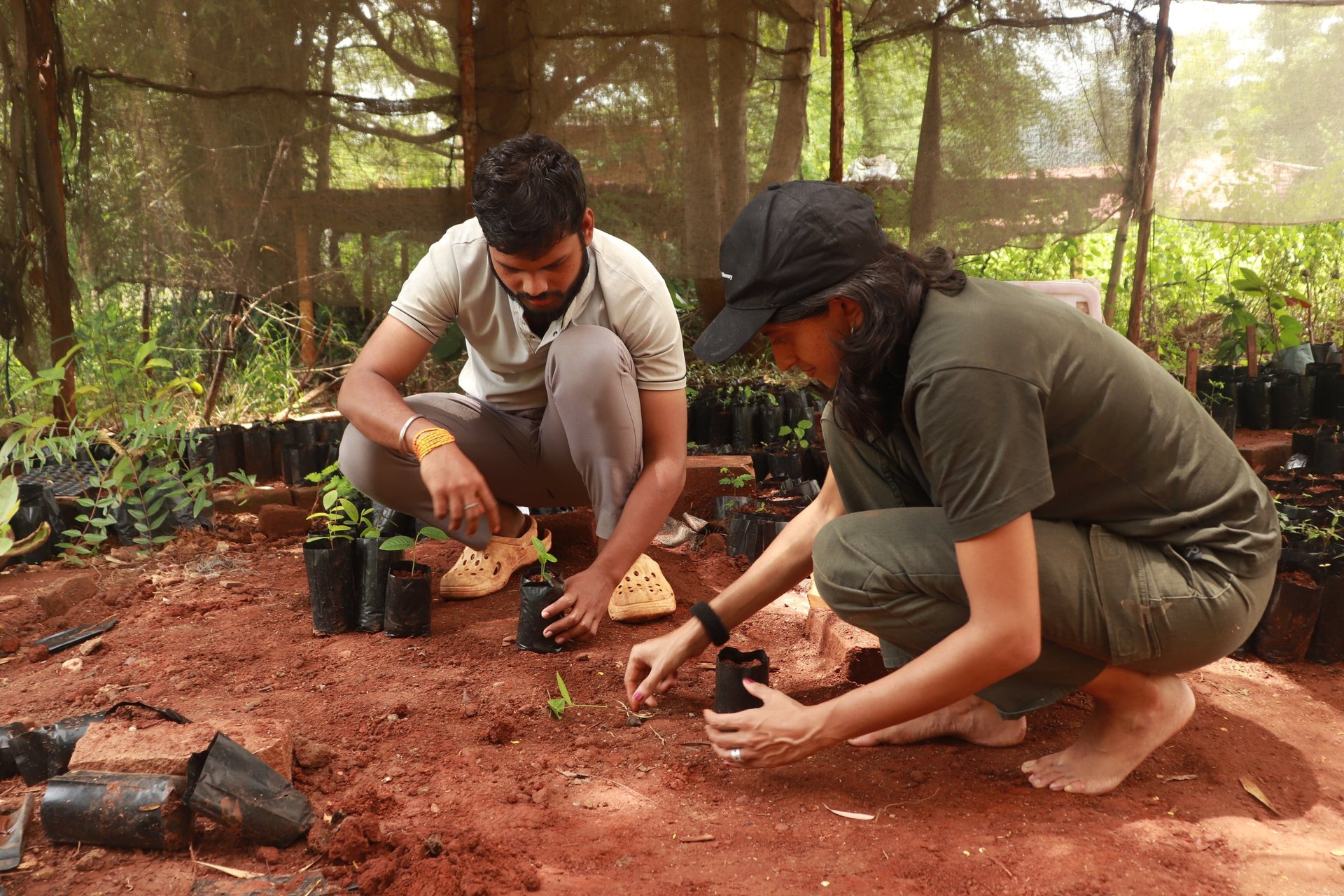
Collected seeds are nurtured under controlled conditions, encouraging strong and healthy saplings to grow.
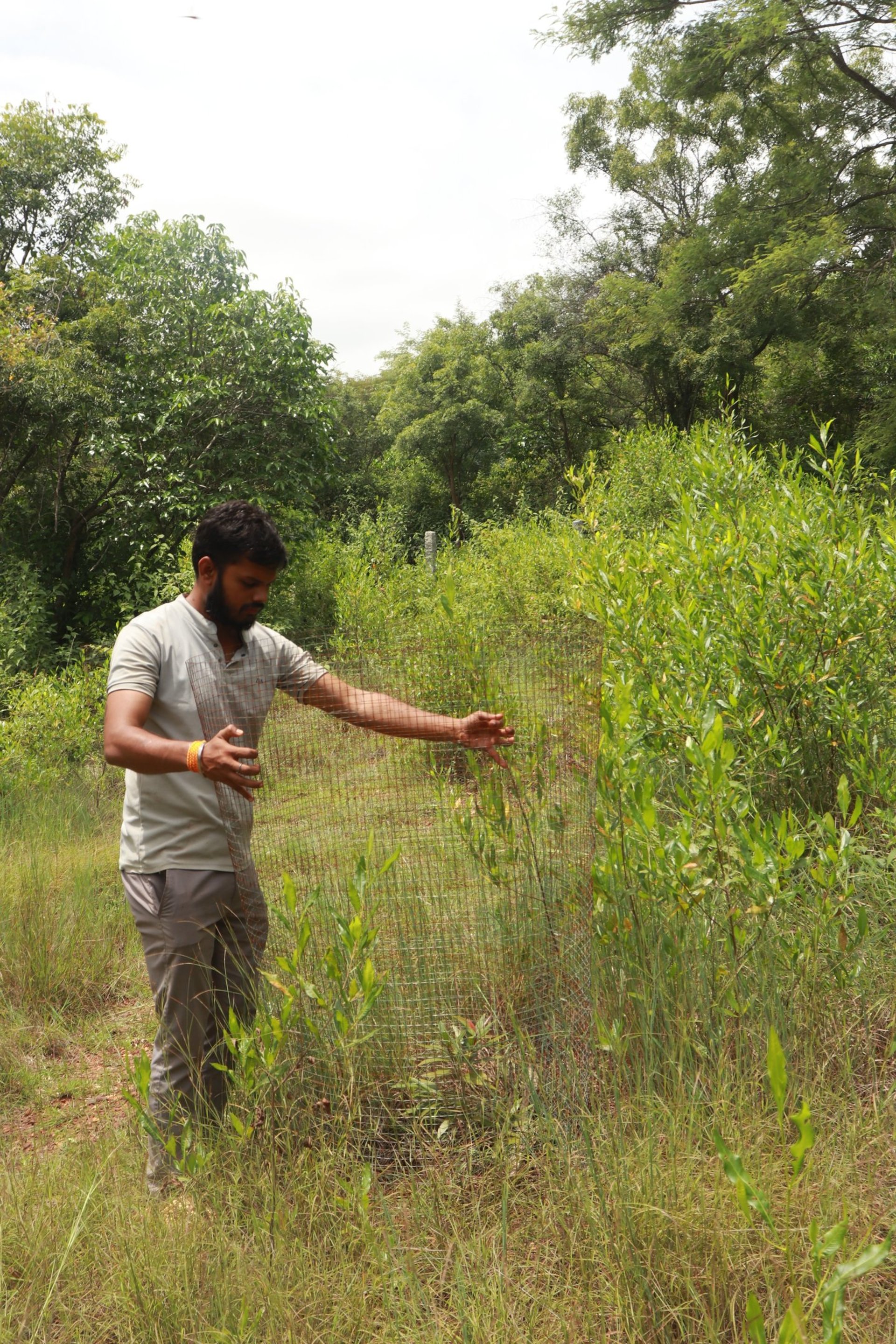
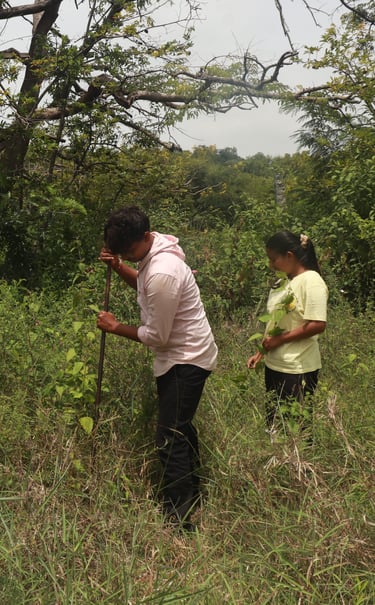
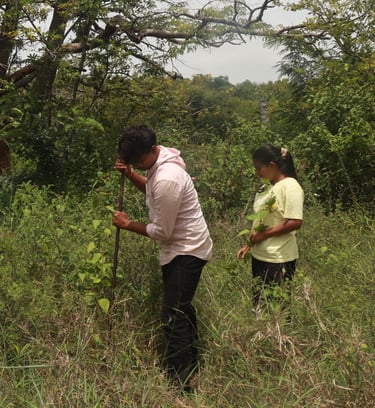
Invasive and non-native plants are carefully removed to restore balance and open space for native growth.
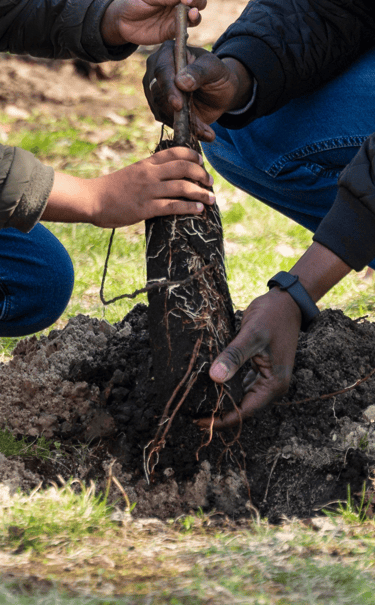
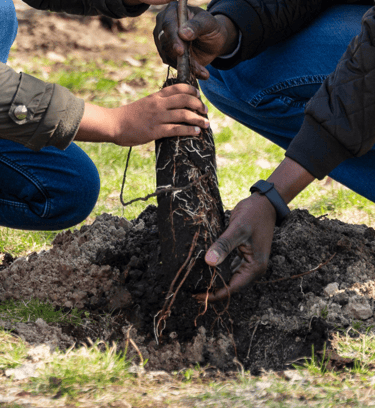
Healthy native saplings are reintroduced, bringing back ecological harmony and supporting local wildlife.
Germination in
Our Nursery
Removal of Non-Native Species
Planting Native
Species
Step 1:
Step 2:
Step 3:
Step 4:
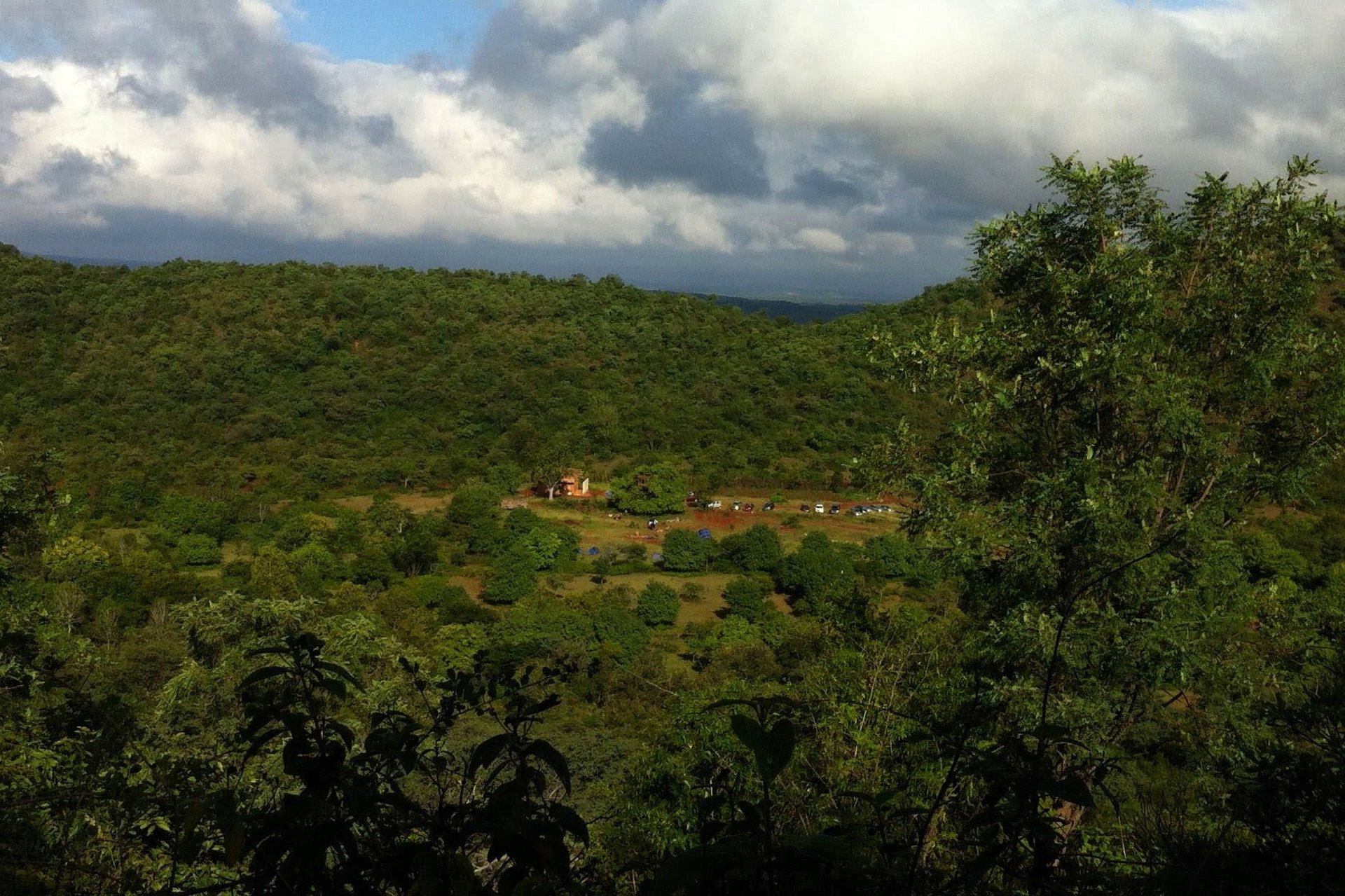
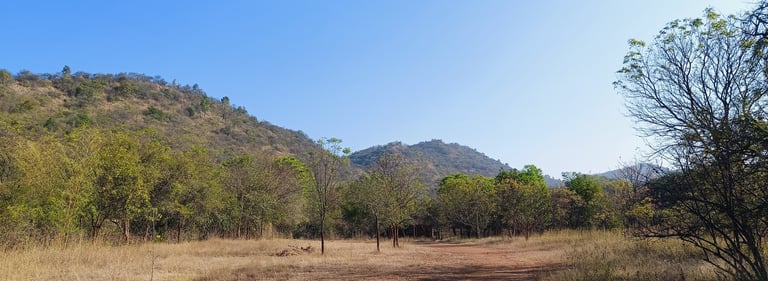
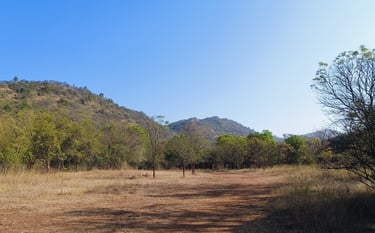
Bamboo Rustles is located in the south Deccan Plateau dry deciduous ecoregion, nestled between the Eastern and Western Ghats. This ecoregion is characterised by a mosaic of dry deciduous, scrub forest habitats with patches of dry evergreen forest at the higher elevations.
The campus is located in a transition zone between Mysore Plateau and Eastern Ghats.
Common trees found in this region are species of Dalbergia, Capparis, Acacia, Albizia and Terminalia, peppered with dry evergreen species such as Memcylon umbellatum, Shorea roxburghii and Buchanania axillaris.
This is where you find the deadly but beautiful and vital Pterolobium hexapetalum. Its hooked thorns are the stuff of legend.
The project is located inside the Veppanapalli Reserve forest, a recognised elephant corridor. While we are occasionally visited by elephants, plenty of other wild fauna pass through Bamboo Rustles, sometimes even making it home.
The abutting dry deciduous and scrub forests are home to rare species such as the calamaria reed snake, lichen huntsman, dhole, and the Hemidactylus granticolus gecko.
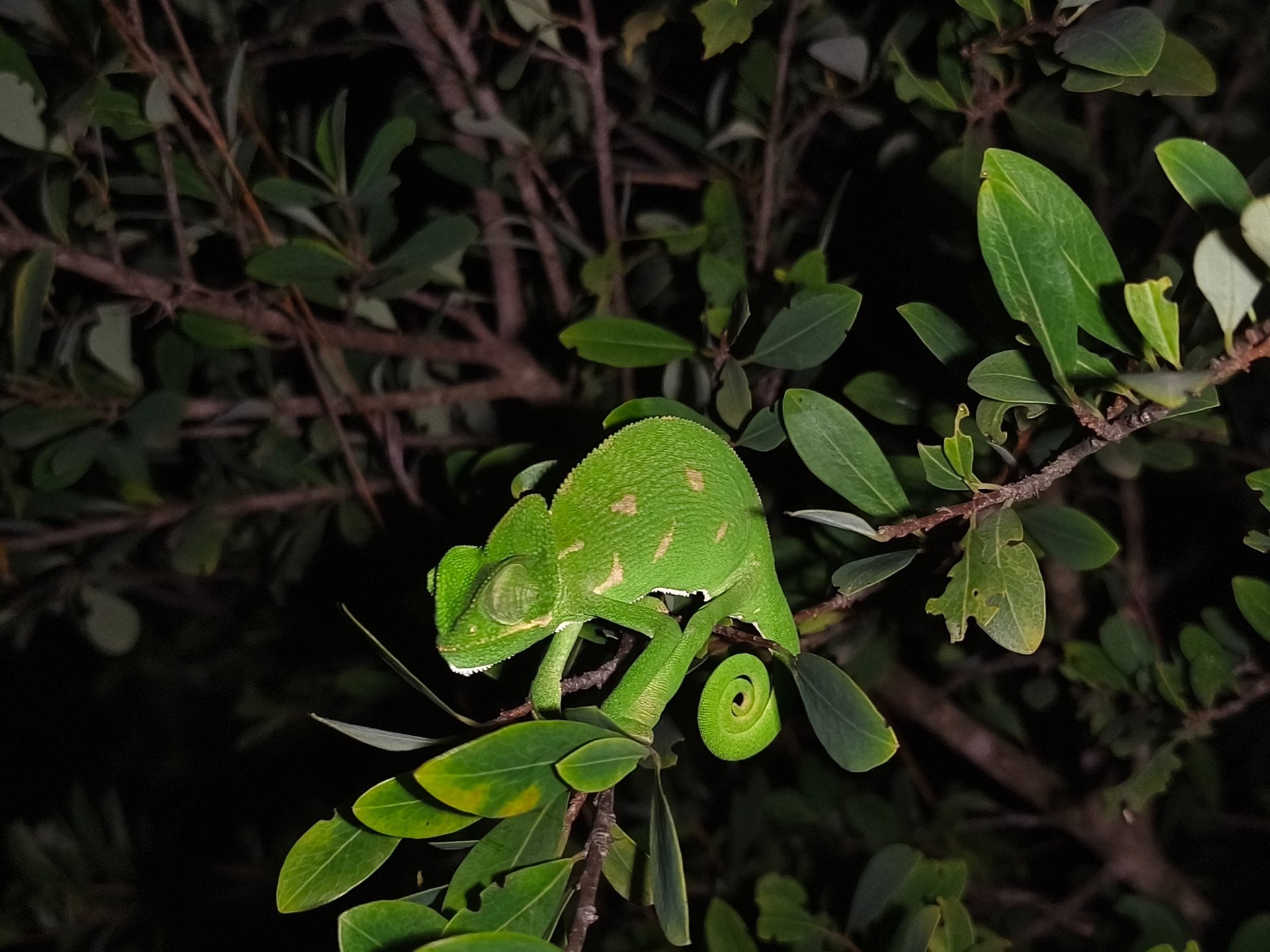
Over 80 species of birds have been recorded around the campus, and there have been multile sightings of slender loris, rusty spotted cat, and chameleons just outside our boundaries.
Where We Are
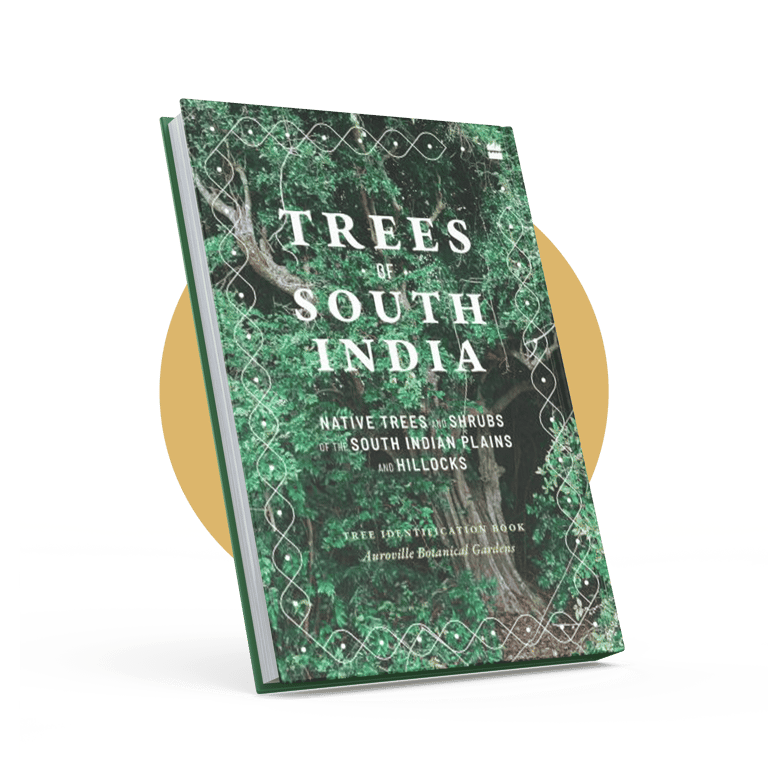
Trees of South India
From the book “Trees of south india, which features 190 native species, we carefully selected and planted 45 trees.
Some of the Species we have are:
Calophyllum inophyllum
Psydrax dicoccos
Strychnos nux-vomica
Terminalia paniculata
Premna tomentosa
Canthium coromandelicum
Hugonia mystax
Flueggea leucopyrus
Gyrocarpus americanus
Dalbergia paniculata
Dalbergia latifolia
Sapindus emarginatus
Vitex altissima
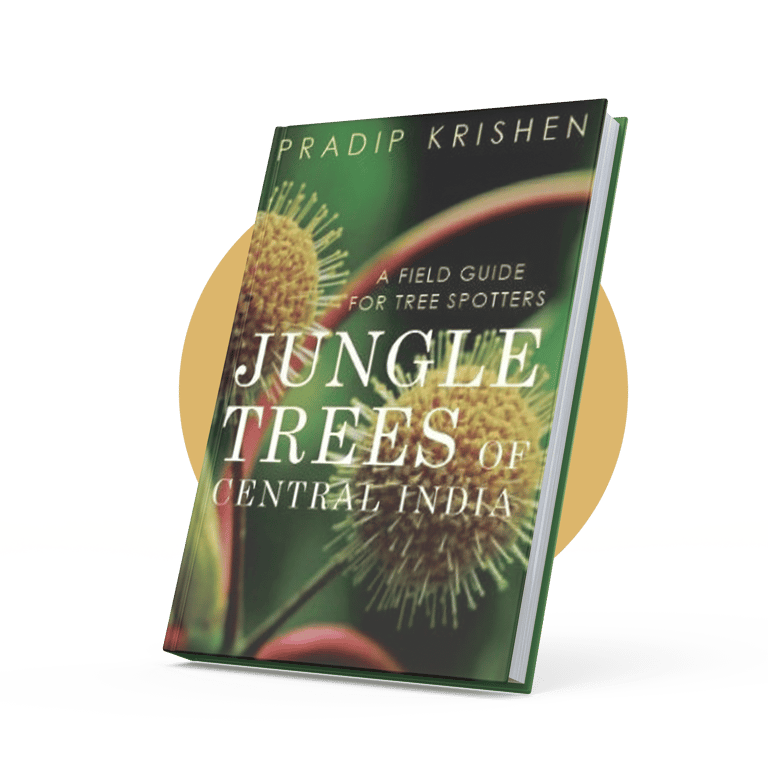
Trees of Central India
From the book “Trees of Central India”, which features 168 native species, we carefully selected and planted 30 trees.
Some of the Species we have are:
Wrightia tinctoria
Ficus benghalensis
Ficus racemosa
Ficus amplissima
Ficus mollis
Madhuca longifolia
Morinda pubescens
Mitragyna parvifolia
Tectona grandis
Careya arborea
Bombax ceiba
Limonia acidissima
Albizia amara
Albizia lebbeck
Albizia procera
Naringi crenulata
Acacia catechu
Bridelia retusa
Pongamia pinnata
Bauhinia racemosa
Bauhinia variegata
Haldina cordifolia
FAQ
Who can apply to stay or conduct research at the centre?
Students, researchers, and nature enthusiasts are welcome. We especially encourage applications from those pursuing projects in ecology, biodiversity, and conservation.
What facilities are available at the camp?
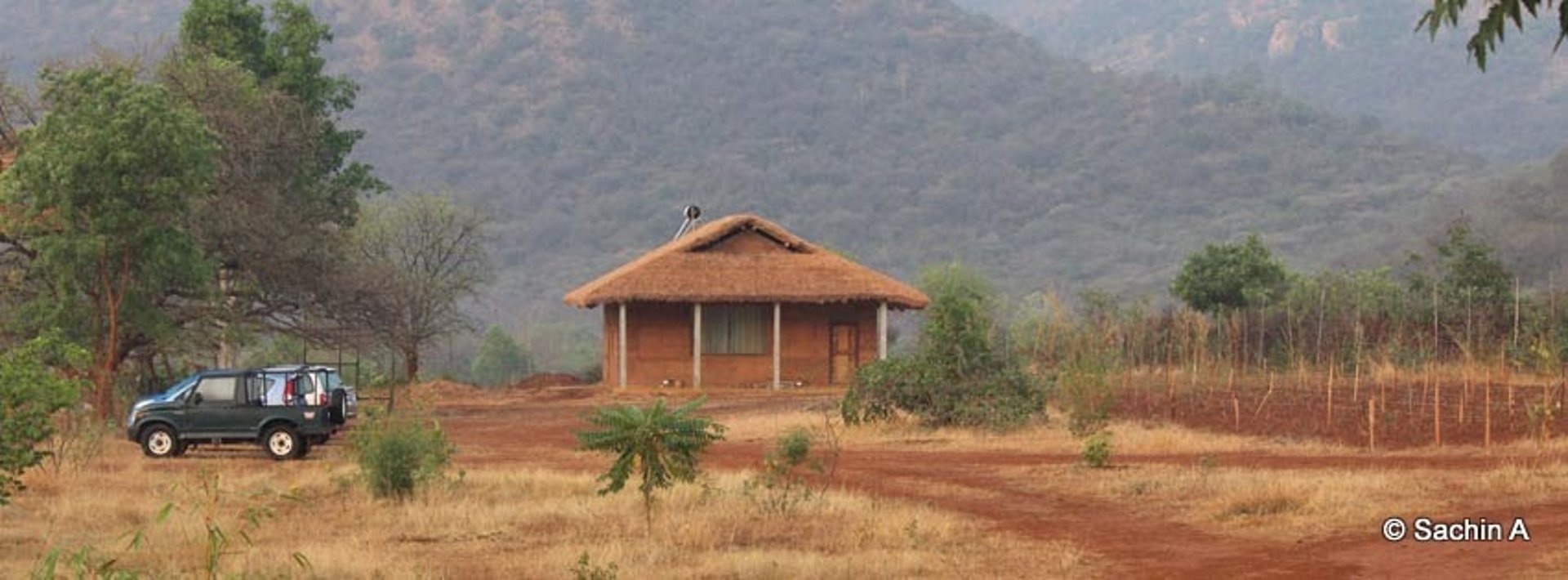
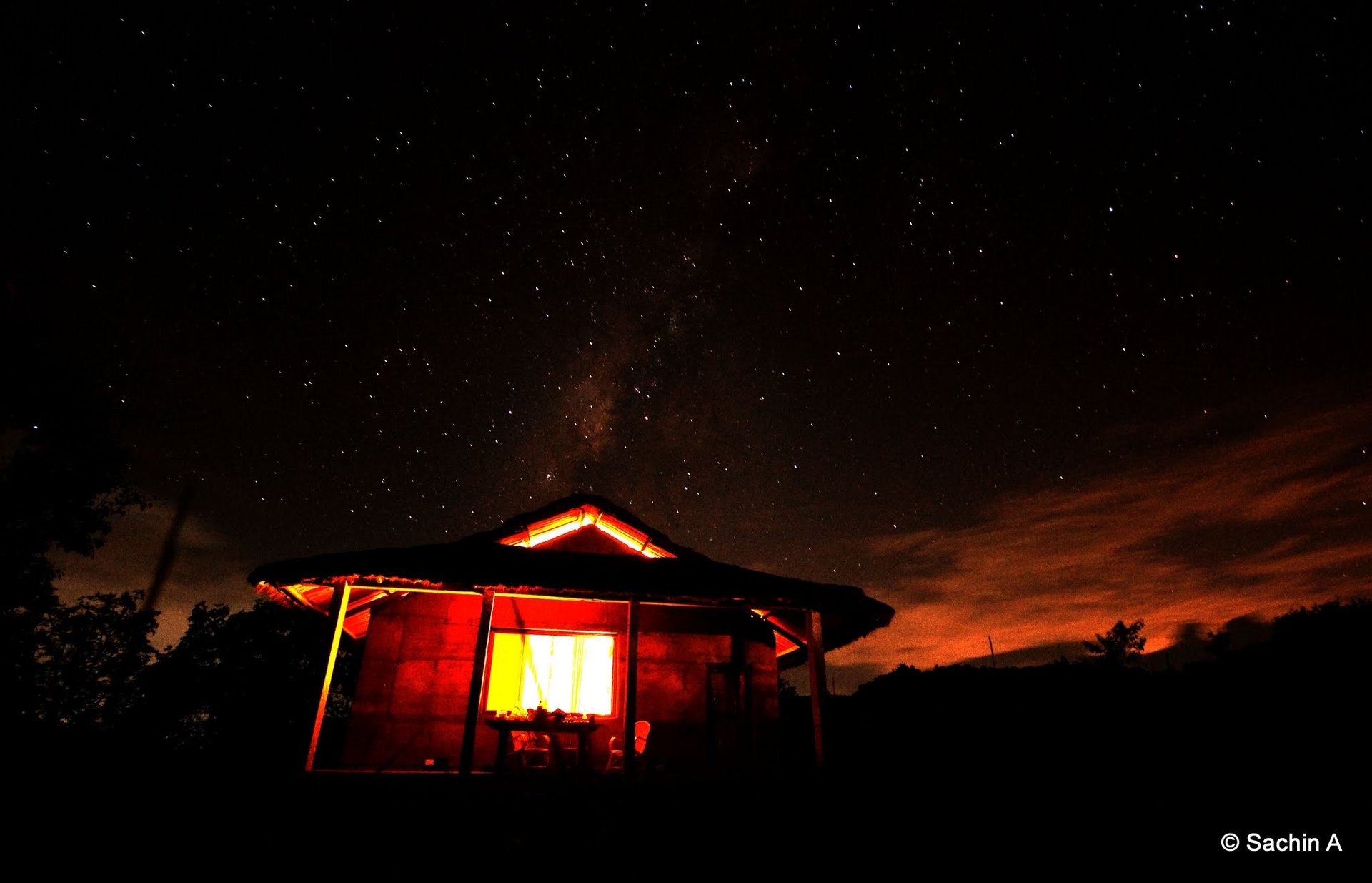
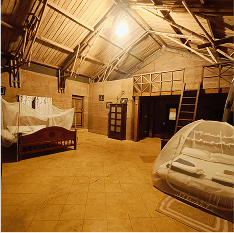
The camp provides eco-cottage accommodation, food, and basic research support. Some shared responsibilities, such as helping in daily camp activities, are part of the experience.
Do I need prior research permits?
Yes. All researchers are responsible for securing required ethical approvals, research permits, or institutional endorsements before starting their work.
How do I apply and when should I apply?
Interested candidates should apply at least 3–6 months in advance. Applications with a supervisor’s endorsement will be given preference due to limited slots.
What kind of wildlife do you see around there?
Bamboo rustles is a special place for herpatofauna. The abutting dry deciduous and scrub forests are home to rare species such as the calamaria reed snake, lichen huntsman, dhole, and the Hemidactylus granticolus gecko.
Over 80 species of birds have been recorded around the campus, and there have been multile sightings of slender loris, rusty spotted cat, and chameleons just outside our boundaries.
Do you need to be a researcher to intern at Bamboo Rustles?
No. Most of our interns are Bachelor's and Master's students, as well as people with a general interest in wildlife conservation and ecosystem restoration.
Independent and affilitated researchers are welcome to set up base at Bamboo Rustles. However, researchers will have to apply for their own permits to work in the reserved forest and to handle Scheduled species.
Observational research is permitted on campus.
Testimonials
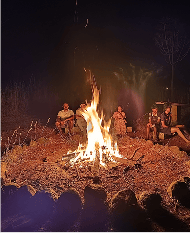
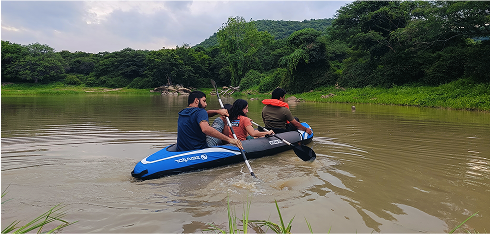
Peaceful and nestled in the middle of the valley, it’s filled with the soothing sounds of nature. The staff is super nice, and the owner has a lot of interesting things to share and is also a good listener. The managers are very knowledgeable and truly passionate about the local fauna. There’s no network coverage, and the Wi-Fi is not always reliable, so be prepared.
Samuel K
★★★★★
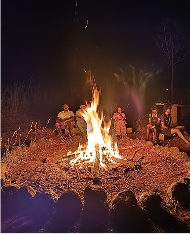
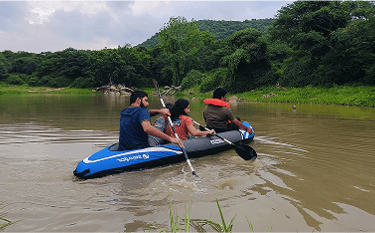
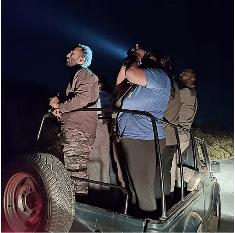
Bamboo Rustles is such a peaceful place. The people are so warm and welcoming that they treat you like family. Everyone here is so knowledgeable that you’ll never get bored, even without network coverage or Wi-Fi. You can go on exciting night outings that are full of adventure. It’s the perfect place to visit if you’re a nature enthusiast or simply looking for a peaceful vacation spot.
★★★★★
Jai Surya
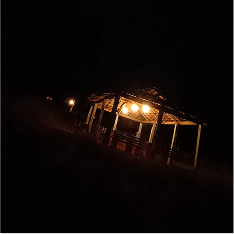
After riding past it many times, I finally stayed at BR for a night, and I absolutely loved it. I love its non-commercial, farm-stay vibe. The food has just the right variety and a comforting, home-cooked feel. The staff and volunteers are super friendly and knowledgeable. The short treks from the camp, guided by the naturalist Vibish, are a great addition for any outdoor enthusiast. I also loved the architecture of the cottage.
Benjamin
★★★★★
Bamboo pit viper foundation, Bamboo pit viper center (sister organisation) started with a goal to hold wildlife workshops in 2012 and has held many birding, herpetology and butterfly workshops over last 12 years. In 2024 we setup BPVRC - Bamboo Pit Viper Research Centre as a company. BPVRC serves as a research centre where researchers and interns can and interns immerse themselves in studying various species.
Home
© 2025. All rights reserved.
Links
Internship
Social Link
Join our newsletter to get updates on workshops and upcoming events.
